Planning the route
In a Sandton restaurant the duct route is often more constrained than the kitchen itself. Ceiling voids are shared with sprinklers and cable trays, risers are limited, and roof discharge has to avoid intakes, windows and neighbouring tenants.
We survey and set out the route before quoting, because a duct that has to travel further or discharge differently will change both the fan duty and the cost.
- Short, direct routes with as few bends as the building allows
- Discharge positioned away from fresh-air intakes and neighbouring windows
- Riser and penetration details coordinated with the landlord
- Fire-stop and compartment details agreed with the building’s requirements
Ducting that can be cleaned
Grease ducting needs access at every change of direction and at sensible intervals along the run. Access doors are fitted with grease-tight seals, and the duct is supported so it does not sag into a grease trap at low points.
Canopy to discharge, one system
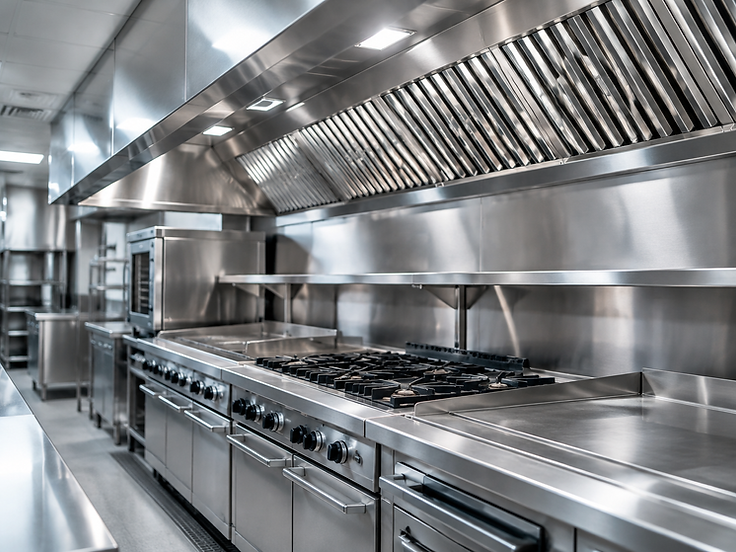
The canopy captures, the duct carries and the fan discharges. The three are sized together: a duct sized for a smaller canopy will choke a larger one, and a fan selected without the real route resistance will run off its curve and move far less air than its rating suggests.
Included in our scope
- Route survey and building coordination
- Grease duct sizing and fan duty
- Canopy connection and grease filter housing
- Access doors and cleaning points
- Roof or wall discharge with weatherproofing
- Commissioning and airflow verification