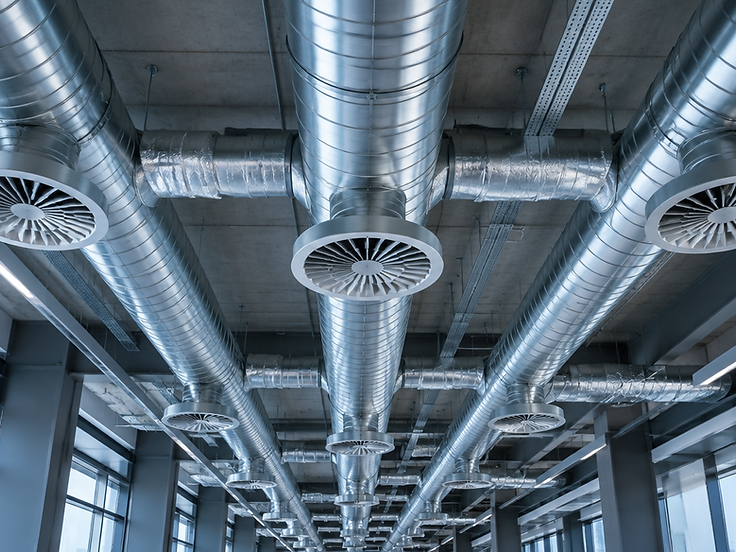
Why galvanised sheet metal
Galvanised steel is cost-effective, readily available in the thicknesses commercial ductwork needs, and easy to insulate and seal. Its zinc coating gives reasonable protection against condensation and humid air, which matters in kitchens, bathrooms and coastal or high-altitude installations.
It is not the right choice everywhere. Where the airstream is corrosive, greasy at high temperature, or subject to washdown, stainless steel or a specialist coating is usually specified instead — and we will say so rather than quote galvanised by default.
Fabrication and jointing
Duct sections are cut and folded to the site schedule, with joints selected for the pressure class of the system. Low-pressure extract runs can use simpler joints; supply systems and longer mains get sealed, mechanically fixed joints to keep leakage down.
- Slip-and-drive and TDC joints for rectangular duct
- Spiral lock-seam duct for round runs and exposed services
- Sealant applied to joints on supply and fresh-air systems
- Turning vanes or radiused bends instead of sharp square elbows
- Hangers spaced to the duct size and weight, with anti-vibration mounts at plant
Matching duct to the building
Ceiling heights, beam depths and service zones usually decide the duct shape. A rectangular duct makes better use of a shallow ceiling void than a round duct of the same capacity, while spiral duct is faster to install and cleaner in exposed-service designs.
We confirm the route and shape on site, then fabricate to that — which is why two buildings with the same brief rarely receive an identical duct layout.
Included in our scope
- Duct gauge and joint specification for the system pressure
- Rectangular, spiral and transition fabrication
- Joint sealing and support installation
- Off-cut removal and site cleaning
- Insulation and cladding where required
- Pressure and airflow checks at commissioning